
Source: Lucie Tousecká
Wooden Footbridge
The footbridge in Kynšperk is the second longest footbridge in the Czech Republic after the one in Český Krumlov, with a length of 63 meters. It connects the left bank of the city with the city center. It is a very ingenious structure with a covered bridge deck, with 13 window openings on each side. The footbridge rests on two concrete pillars and connects on both sides to the remains of the original reinforced concrete footbridge. The roof structure has 65 rafters, 30 perpendicular double columns, and 15 transverse honeycombs. It was built in 1950 by local carpenters and workers.
Source: Jana Tomsová
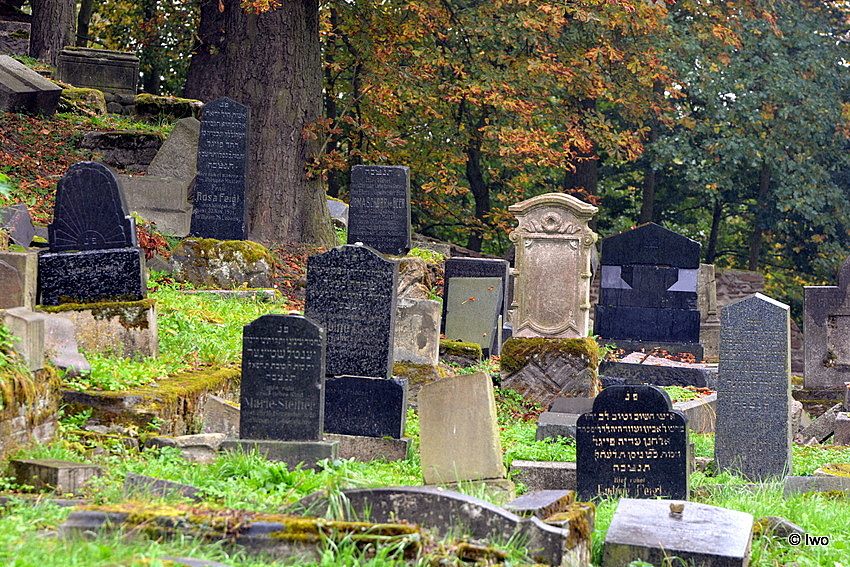
Jewish Cemetery in Kynšperk nad Ohří
Even before the Hussite period, the cemetery was an integral element of the town settlement. The oldest surviving records date back to March 1350, when a large pogrom of the Jewish population took place in Cheb. There are 127 gravestones on the rampart and in the lower moat. The upper moat contains a newer section, where we can find tombstones from the second half of the 19th century and the early 20th century. During Kristallnacht (Night of Broken Glass) in November 1938, the cemetery was destroyed by fascist fanatics.
Source: Lucie Tousecká
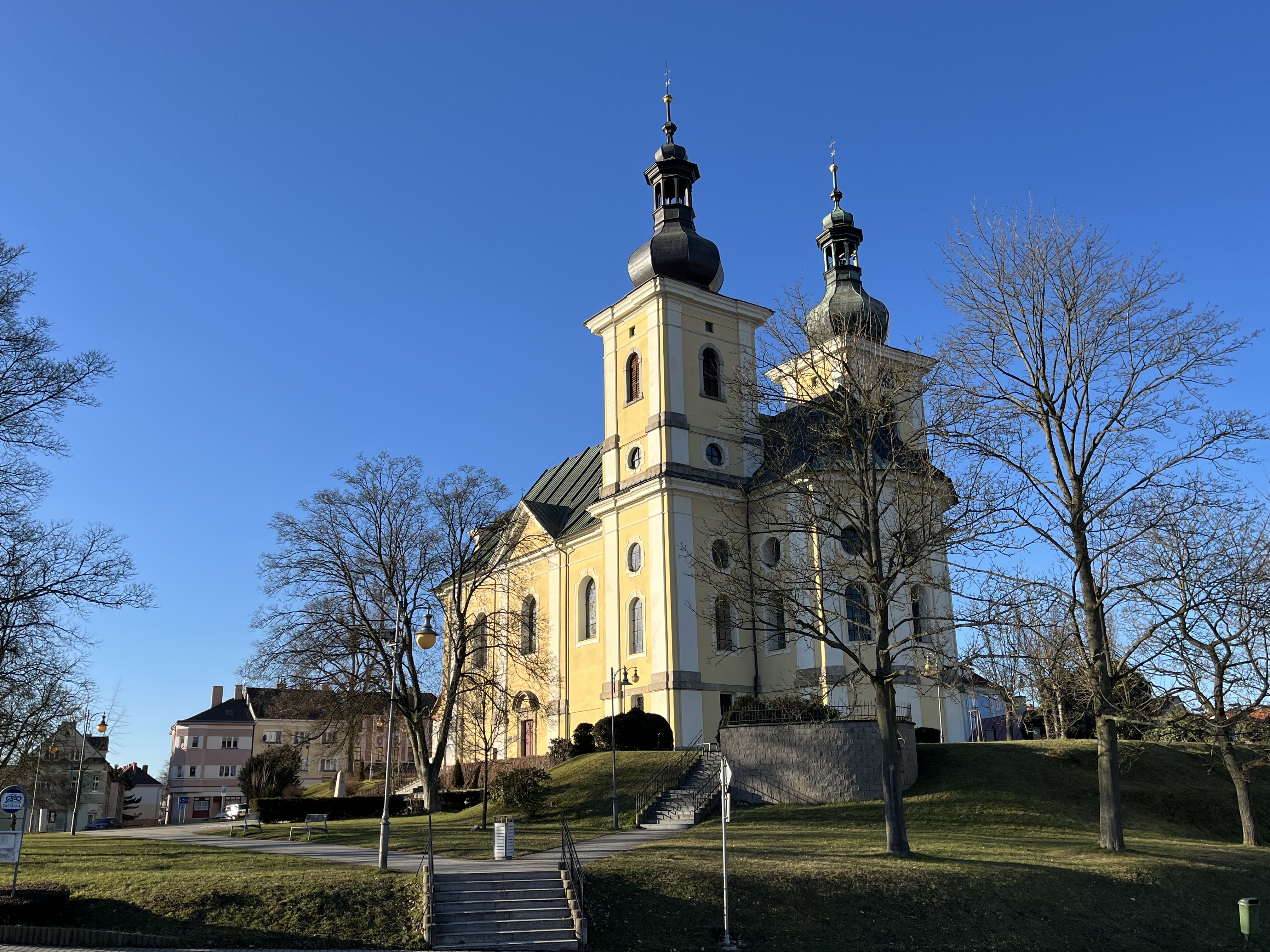
Church of the Assumption of the Virgin Mary
The Roman Catholic single-nave church was built under the supervision of local builder W. Baunbock according to a design by J. B. Mathey. It is a High Baroque structure, built between 1721 and 1727 on the site of the original Gothic church. Next to it stands the Chapel of Mount Olivet, and nearby is the rectory and a statue of the Virgin Mary Immaculata, which, together with the church and rectory, has been protected as a Cultural Monument of the Czech Republic since 1963. The two church towers dominate the town.
Source: Lucie Tousecká
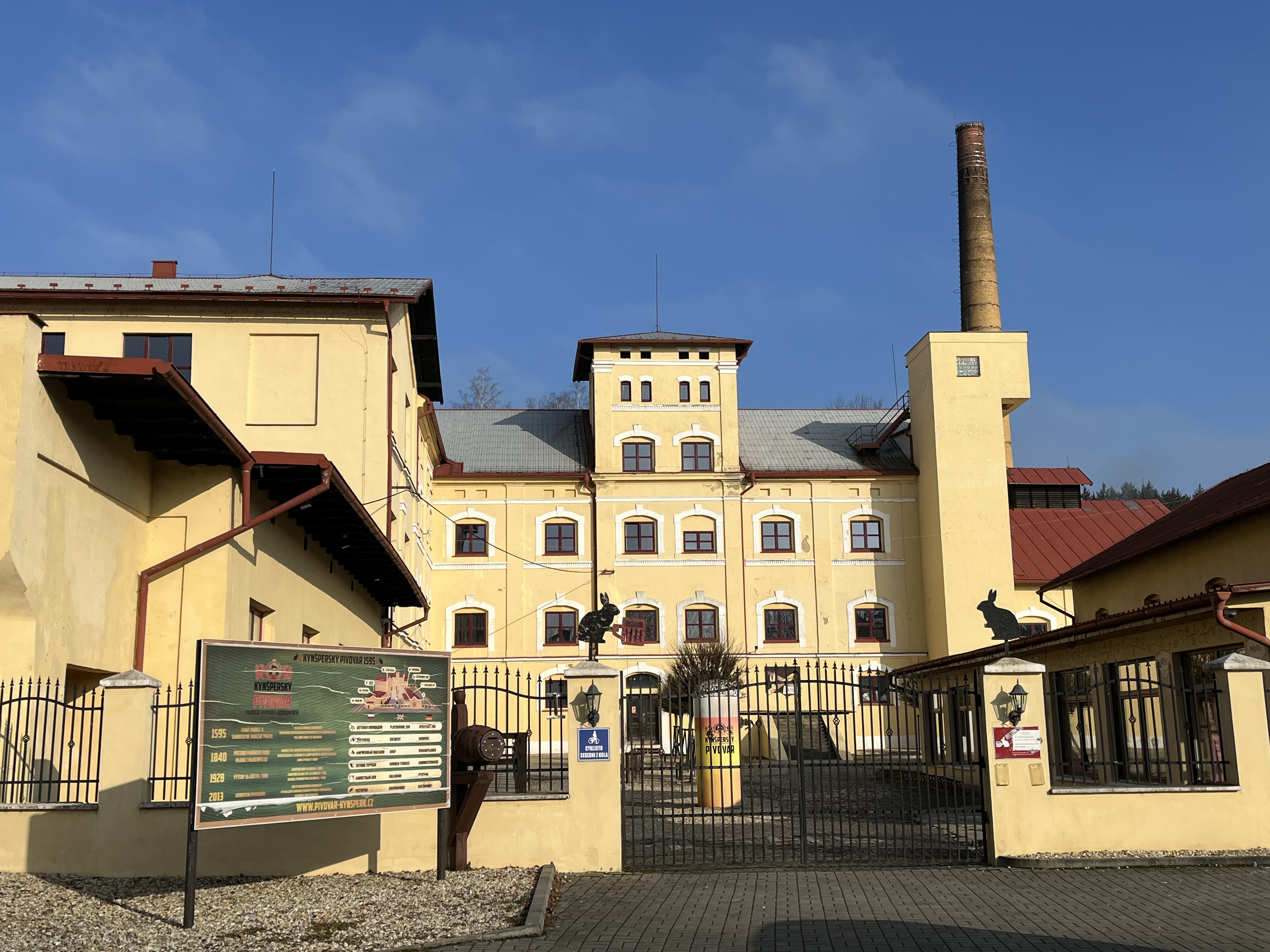
Kynšperk Brewery
After 1945, the Kynšperk Brewery supplied most of the pubs in the Sokolov district. Beer was produced here until 1955, after which the building was converted into a warehouse for craft supplies. Since 2013, when it was reopened, beer has been brewed here under the Kynšperský zajíc brand. The oldest building in the entire complex is the taproom, formerly a malt house, which has been in operation since the 16th century and now houses a restaurant with a winter garden.
Source: Lucie Tousecká
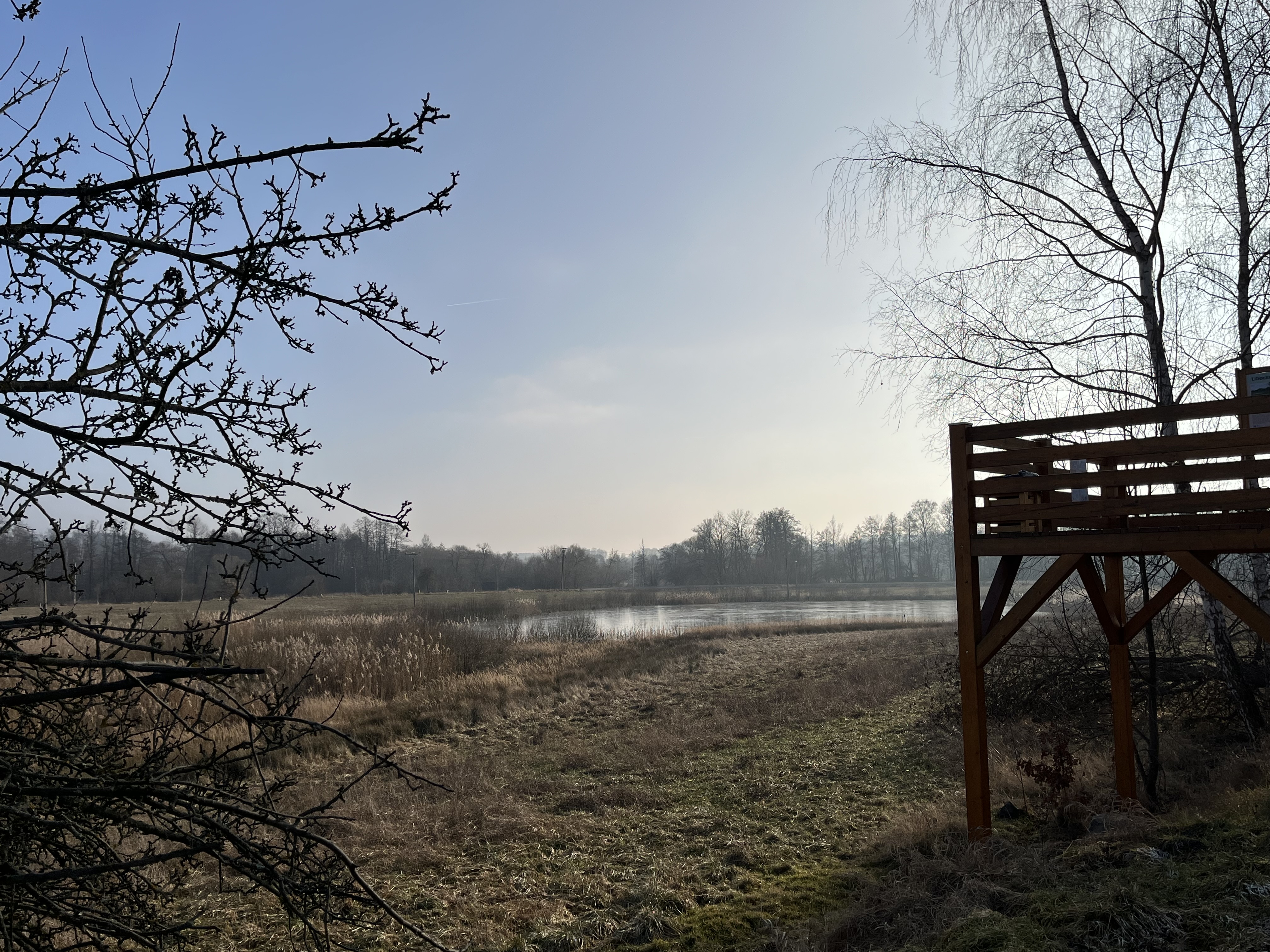
Libocké Wetlanads
Not far from the train station there are the Libocké wetlands. They began to form spontaneously due to subsidence into flooded old mines and now cover an area of around 3 hectares. Here you can observe a diverse range of water-loving fauna – amphibians and insects. From the wooden observation tower (approximately 2 meters high), you can see wetland birds such as the western marsh harrier (Circus aeruginosus), little grebe (Tachybaptus ruficollis), gadwall (Mareca strepera), little ringed plover (Charadrius dubius), and spotted crake (Porzana porzana).
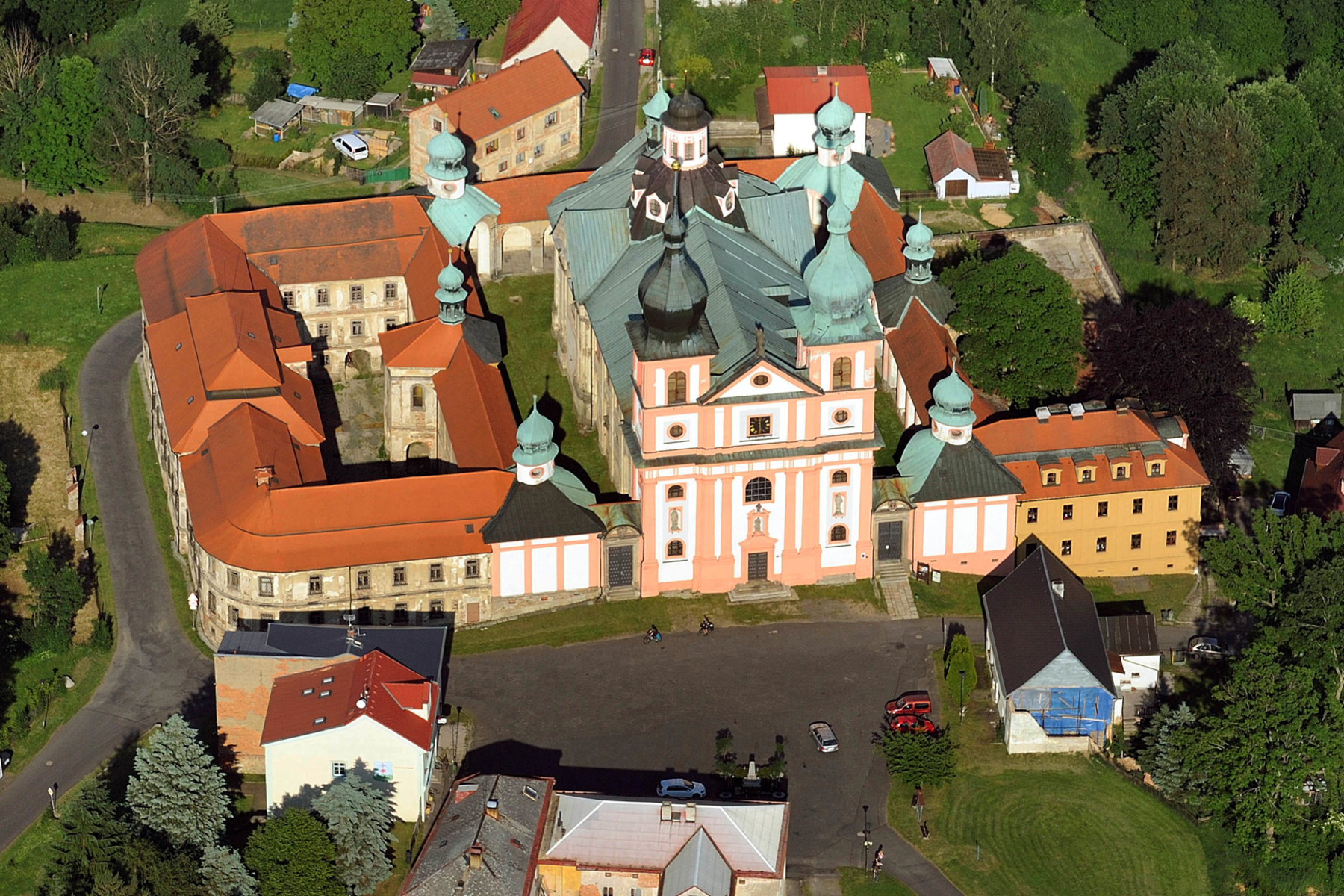
Source: Živý kraj
Pilgrimage complex at Chlum Svaté Maří (Maria Kulm) with the Church of the Assumption of the Virgin Mary
The pilgrimage site was declared a National Cultural Monument in 2018. It was built at the beginning of the 15th century near the convent of the Knights of the Cross with the Red Star. According to legend, the church was built on the spot where a butcher's apprentice found a statue of the Virgin Mary with the baby Jesus, which always returned to its original place after being taken away. The apprentice perceived this phenomenon as a miracle and returned the statue to the hazel bush where he found it, and had a wooden roof built over it to protect it from the weather. In 1687, Chlum Svaté Maří (Maria Kulm) was elevated to a provostry. The church, including the rectory, was subsequently extensively rebuilt (according to designs by Christoph Dientzenhofer) to its present form as one of the most beautiful Baroque complexes in the Czech Republic.